Password Vaults and You
With more and more websites necessary for our everyday activities, it’s getting harder and harder to manage passwords. By now, you will know not to write passwords on post-it notes and paste them on your screen. It’s not uncommon for most people to use the same username and password on a number of sites, particularly on sites we think are less important – for example, hotel websites or some news sites. However, this is a dangerous game to be playing with your information and cyber security.
The problem is that when (not if) your information gets breached, your username and password get into the hands of bad actors who poke and prod other sites on the internet, and test where else you may have used one of these passwords, or a simple variation.
Of course, this is a cyber security challenge. We cannot easily remember hundreds of passwords, especially complex ones. We need an easy way, and we have a solution. A password vault.
But then the question you will ask is, “what happens if the vault is breached?” You need a super-secure vault. Something that easily remembers, (and creates) complex passwords for you and your colleagues – personal and work – and operates on Windows, Mac, and mobiles. It needs to be SOC2 certified so you know it’s secure.
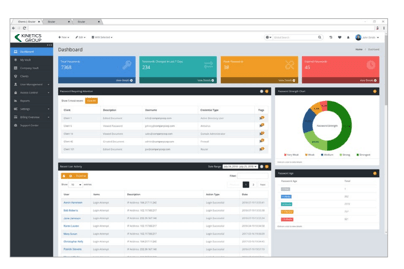
What can a password vault offer you?

- No more remembering dozens of passwords
- Faster access to websites and applications
- Centralised system for both corporate and personal passwords
- Folders to organise and categorise credentials
- Automatic generation of audits and reports to help with tracking and compliance
- Improve the cyber security you provide your colleagues by promoting a password management system you trust
- Use strong password strings to thwart hackers
- Receive a notification of all the passwords of departing employees so clients can remove their access to company systems
- Give clients the tools to granularly grant employee access to employee systems and networks
- Meet compliance measures with comprehensive auditing and reporting capabilities
- Users can access their Site credentials quickly and easily through the native mobile apps on iOS and Android®, auto-fill to log in to websites, and apps on mobile devices
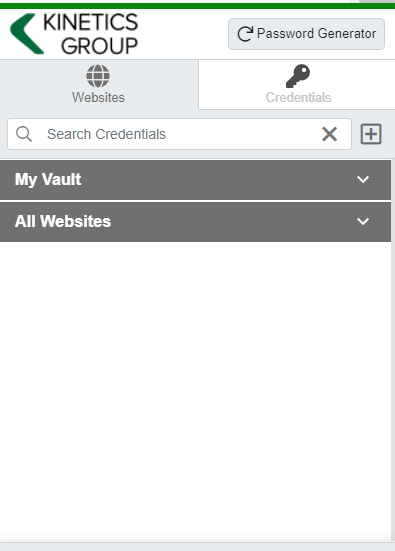
- Cross-browser extension for Google, Chrome, FireFox, Edge, and Chromium-based browsers
What’s your next step?
We’ve created a simple 9-point checklist to help you navigate the cyber-risk landscape and find the right digital security solution for you.
Kinetics can offer you a KARE Password Vault as part of KARE for Security S2 plan or you can subscribe to this standalone for $20 + GST per month for 5 users
Find out more about our Cyber Security Plans here

Can you really run a business with only virtual staff?
Short answer: yes — in some cases. Longer answer: it depends on what kind of business you’re running, and what “staff” actually means in 2026. We’re seeing a growing wave of businesses experimenting with fully virtual teams — not just remote people, but AI agents...

Could you get into trouble with the law if you lose a USB stick?
A lost USB stick can be a notifiable privacy breach. Here’s why that matters It sounds old school, but USB sticks are still floating around plenty of NZ businesses. A recent draft decision note from the Office of the Privacy Commissioner is a timely reminder...

Copilot Upgrade: Is “Claude” coming to Copilot?
Copilot Upgrade: Welcoming the Sonnet Engine (Claude's engine)A Smarter, Faster Copilot Experience Microsoft has started to roll out the new Sonnet engine across Copilot! This will bring a noticeable improvement in speed, accuracy, and the quality of responses. For...

Additional M365 Security Protection Rolled Out for our KARE Foundation Customers
Turning up your cyber-security Kinetics is busy rolling out an additional security protection for Kinetics KARE Foundation customers only, designed to stop a highly active and sophisticated phishing campaign currently targeting Microsoft 365 environments worldwide. ...

Webinar Replay: What Recent Cyber-Breaches Teach Us About Protecting Your Business
Every cyber-breach tells a story, and the best way to protect your business is learning from others' experiences before they become your own. This isn't about fear—it's about learning. We'll translate real-world breach experiences into practical insights you can apply...

Microsoft Copilot in 2026: Why So Many Businesses Are Taking a Second Look
Think Copilot Was a Let‑Down? It’s Quietly Got Much Better in 2026 If you tried Microsoft Copilot early on and walked away a little underwhelmed, you’re not alone. We heard it a lot last year: “It’s interesting, but it’s not quite there yet.” The thing is that Copilot...

Your (Home/Small Business) Router Could Be Working for Criminals Right Now
Right now, somewhere in the world, a home or office router is quietly routing cybercriminal traffic, and its owner is completely unaware. That's the reality revealed by the discovery of KadNap, a sophisticated malware campaign that has become one of the most...

When Geopolitical Conflict Becomes Your IT Problem
Lessons from the Stryker Cyberattack A global medical technology company. 56,000 employees. Operations in 60 countries. And in March 2026, systems wiped across every one of them — not because of a data breach or ransomware, but because of a school bombing in Iran....

When AI Becomes the Attack Tool
What the Mexico Government Breach Means for Your Business A cyberattack that unfolded over December 2025 and January 2026 has changed how security professionals think about AI . New Zealand business leaders should take note. A single attacker jailbroke Anthropic's...

A Revolution in Copilot: Adding “Tasks” goes from AI Answers to AI Action
From AI Answers to AI Action For the past year, Microsoft Copilot has helped people draft emails, summarise meetings, and analyse documents. Now Microsoft is taking the next big step with Copilot Tasks. This is a new capability that moves Copilot beyond...