The Trillion dollar industry
At the time of writing, the Waikato DHB cyber-attack is ongoing. The government is refusing to pay the ransom as a point of principle, and it looks like every possible tool at their disposal is being used to try to recover the situation.
Should they just pay the ransom? Or should the government go further and make it illegal to pay ransoms in New Zealand? That’s the question that Minister Kris Faafoi is having to assess at the moment. DHB attack: Why Justice Minister Kris Faafoi won’t make it illegal to pay a cyber-ransom – NZ Herald
Cyber crime is big business. We’ve called it organised crime in previous articles and we’re happy to stick with that. These organisations recruit the best and brightest out of the top universities, and give them both the latest tools and time to wreak havoc. Their recruits are paid astronomical sums to work for them, overcoming any moral objections with immorally large pay checks. These paychecks are funded by the proceeds of previous hacks. Every time they are paid, their war chest is strengthened. For example, we recently saw the Colonial Pipeline in the eastern US get hacked for 75 bitcoins (just under US$4M) which went to a criminal group called ‘Darkside”.

So, will cutting off payments stop their attacks by removing the incentive?
These criminals are smart and highly motivated. They seem to have no conscience but plenty of greed. Waikato is not only the hospital being brought down – there was a huge wave of hospital attacks in the US in October, just a few months ago – Several hospitals targeted in new wave of ransomware attacks – CNNPolitics.
I don’t know how Waikato DHB got infected, but the rumour is that it was from phishing attacks onto machines that weren’t fully patched up to date. We don’t know if that is true, but it is a common attack vector. Once a hacker gets into a system, they often hold back and try to dig further looking for more vulnerabilities they can exploit. The more damage they can cause, the more ransom they can demand, so they will often use one vulnerability to find the next, and so on until they finally have enough to bring the house down.
Security is all about layers. There is NO way to prevent attacks, and it is impossible to guarantee that any system is invulnerable. We saw that with the recent Hafnium attack where a vulnerability was exploited before patches were available to block it. But the more layers of security, the harder you make it, and you reduce the scope of any harm.
Today, even if you have the best backups and can recover the system, the hackers then threaten to release the data you hold to media or competitors. In the case of the Waikato DHB, it is being reported that personal data is being released to media by the hackers to increase pressure, even as they fail to stand their systems up.
As to paying the ransom, I suspect your perspective changes when your business, your job or livelihood is threatened. Not an easy decision and hopefully one we can avoid by being paranoid.
The best solution we can recommend is to check your cyber insurance and to apply the best security you can reasonably afford, which should be more than you had last year. Expect it to be more again next year as new tools and new threats emerge. Consider managed security solutions like our KARE Plans.
We don’t know where this will end, or if it will end, but let’s hope so. It is such a drain on our resources and holds us back from investing in tools that make us more productive.

Welcome OutSource IT
Welcoming OutSource IT to the Kinetics GroupWe’re excited to share some great news - on April 1, OutSource IT officially joined the Kinetics Group of companies. This is a fantastic step forward, not just for Outsource IT and Kinetics, but most importantly for you -...

Introducing the Windows 11 Roadmap
Windows 11 keeps changing. Regular updates that roll out every 6 months result in different features. We frequently highlight the most obvious of those in this news platform, and we will continue to do so.But you don’t need to wait for us! A few days ago, Microsoft...
Who’s been paying attention?
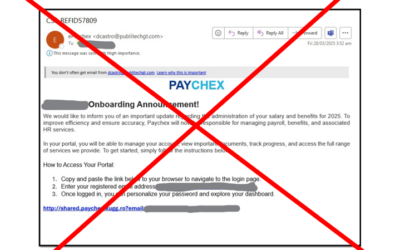
We’re really proud of our clients! Last week, these little pieces of ill-intentioned mischief popped up for a couple of the businesses we look after.They were smart enough to evade anti-spam software but not the cyber-training. Although the emails look legitimate,...

March AI Digest
Here are a few of the headlines that caught our eye in the world of AI in March. Nvidia's share price fell after DeepSeek's rise but soon rebounded, backed by $39.33 billion in revenue, exceeding forecasts. Nevertheless, new chip tech from Meta, Google, and...

Webinar Replay: AI in Action: How one business saved a day a month
AI Builder in Action: How One Business Saved a Day a Month Learn how one business uses AI tools to save one day of effort each month Use AI models to automate processing of documents, images, and emails Design AI prompts to supercharge your workflows Key Topics:...

Which of these new features in Windows 11 will save you time?
Which of these new features in Windows 11 will save you time?
Microsoft are gradually rolling out new Windows 11 features to Beta users, This means that the rest of us can expect them sometime later in the year.

Don’t let these common security gaps take your business down.
We’re only a few months into 2025, and already we’ve seen businesses hit hard by cyberattacks they could have prevented. Every time we conduct IT security checkups, we find the same critical vulnerabilities—gaps that could lead to serious downtime, data loss, or...
Has Outlook “classic” been dropped from Microsoft 365?
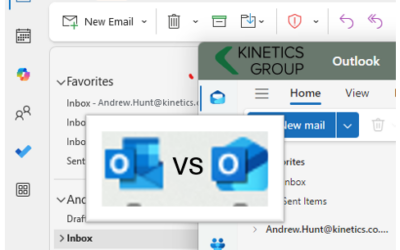
Late last year, we commented on the new Outlook, and how it wasn’t being appreciated as much as Microsoft might like.Our view on this has only been reinforced with most clients preferring the ‘classic’ version that we are all used to.We’re now seeing that the Classic...

AI Digest: February 2025
The AI race steams on in February. Our Kambium Consulting colleagues are tracking the world of AI and keeping us abreast. Here's the summary for Feb 2025 in case you missed it. Firstly the adoption in sales is compelling. That makes sense. Sales people have to...

NCSC warns law firms
It’s not surprising that legal practices are targeted by cyber-criminals.By their very nature, they hold considerable amounts of private “PII” data (personally identifiable information). On top of that, law firms are typically busy, pressured environments where it is...