Good practice last year isn’t good enough anymore.
Even cyber-insurance providers are getting more selective before accepting cover, or worse, before paying claims.
With the number of claims skyrocketing insurers are increasingly asking, “What did you do to protect yourself from the obvious and known risk from cyberhackers?”
The levels of protection you put in place 1 or 2 years ago probably aren’t adequate for the threats today. They are evolving so rapidly.

So what can you do?
Hackers aren’t waiting for you to make a decision to put protections in place.
They are spending every waking moment trying to find new ways of stealing your data. They have set themselves up as businesses to do evil. They hire the best and brightest talent, and have the latest tech – simply because it’s worth it. Its organised crime and these guys are the mafia of the modern age.
We see continuous hacks on most of our clients. These are attempts to penetrate their firewalls, or guess their passwords on Office 365. We see fake webpages through phishing attempts, and we see techniques to harvest password reset questions by asking for favourite teachers, or first cars, or favourite band on platforms like FaceBook.
That’s why your cyber-insurance and business continuity insurance providers will be starting to ask more demanding questions when you renew your cover. They are well aware of the risk and they want to know that you have taken all reasonable steps.
You need to be able to reassure them that you have:
- deep endpoint protection
- a penetration and vulnerability assessment
- data governance that is fit for purpose
- awareness programmes for all users and verification
- dark web monitoring
- multi-factor authentication and complex passwords
and so much more – the very items we have included in our KARE for Security services.
The question for you, and your insurer, is what level of protection is appropriate for your organisation so your insurer will cover you if you need to claim? That is why we have two levels of cyber-protection, and, because this isn’t static, it is why we keep investing and researching additional tools to help defend you from harm.
The Hackers are turning up their attacks on you – are you turning up your defences to match?
One quote we saw recently that rang true was:
“A cybercriminal only has to be lucky once, while a defender has to be lucky every minute of every day.”

What’s your next step? We’ve created a simple 9-point checklist to help you navigate the cyber-risk landscape and find the right solution for you.
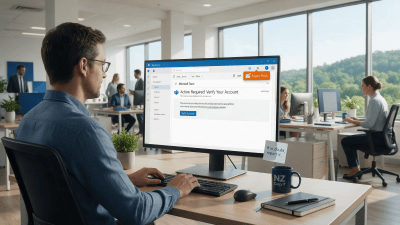
Fighting Back Against Phishing: A Report Button in Outlook
A one-click Phishing Report button is coming to Outlook for KARE Foundation clients. Why reporting beats deleting.
Webinar Replay: Your Staff Are Already Using AI. Now What?
A 30-minute webinar on the AI Maturity Model: where your business is with AI today and what to do next.

Protect Sensitive Information Before AI Surfaces It
Copilot makes oversharing easier to see. How Sensitivity Labels and Data Loss Prevention help protect sensitive information in Microsoft 365.
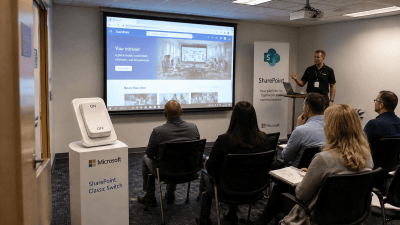
Classic SharePoint pages are being retired. Here’s what to do about it
Microsoft is retiring Classic SharePoint pages, Publishing sites and custom scripts. Here are the key dates and a practical plan to get ahead of it.

How We’re Using AI Inside Kinetics Group Today
Three practical AI tools we use every day, what is coming next, and how AI has changed the way we build software.

AI Is Moving Fast. Don’t Panic
Dramatic AI headlines are everywhere. Here is a calmer, practical way for businesses to think about AI.
Where Do Software Bugs Come From?
From a moth in the Harvard Mark II in 1947 to modern cloud apps: where software bugs come from and how they get caught.
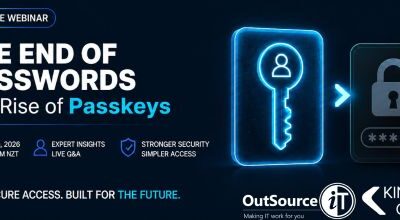
Webinar Replay: Passkeys Explained, the Simpler, Safer Way to Sign In
Bill Lunam and Garreth Keet explain passkeys, Microsoft’s retirement of SMS and voice MFA, and how to roll passkeys out in your business.

7 New Copilot Features That Quietly Changed the Game
Cowork, Coworker, Analyst, Researcher, agents, memory and Notebooks: seven newer Copilot features and how businesses can use them.
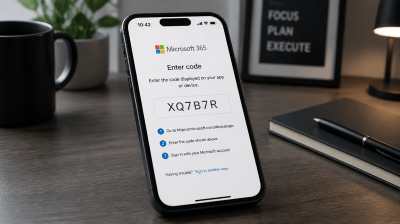
Device code sign-in: the Microsoft 365 attack that gets past MFA
Device code sign-in is convenient for Teams Rooms and smart TVs, but attackers now use it to get around MFA. Here’s how it works and what we’re doing about it.