
Data Leak Protection (DLP)
is the name of several policies in Office 365, setting up what data can, and can’t be, shared and with whom.
Imagine being able to automatically identify private information like passport numbers, Health IDs or bank account details and make sure that those are only being shared with people that are authorised to see them.
The good news is that you can do this with 365, provided you turn on the policies and set them up correctly, and monitor when data is shared.
Under the NZ Privacy Act, we’re all expected to take care of personal data entrusted to us and to make sure it’s only used for the purpose for which is being obtained.
With Office 365, there’s no excuse for that to be breached provided that we understand what data should be kept, what might be kept incorrectly, and how its being shared. With this we can set up rules to monitor your Office 365 system and report on how records are shared.
We include a basic set up of DLP in our KARE for Security S2 plan to get you started.

Obligations to the firm’s Partners and Management
Are you meeting your obligations to your firm's stakeholders? Until relatively recently a law firm's management committee typically only got involved with IT when the management wanted to proceed with a major capital investment - a system refresh, new practice...
2021 Trend Reports confirms cyber-security advice
How many people DON’T report ransomware attacks? It’s too early to see the Q42021 results from CertNZ but their Q3 report tells there were 2,072 incidents that they responded to in Q3 and fraud/scam’s were up 25%. Their report confirms that the very risks we have been...

Hackers Caught! Millions Seized
Crime doesn’t always pay. The FSB reports (if you can read Russian) that they have taken down the “Revil” band of hackers. These are the people that have caused absolute havoc, from disrupting the US oil pipelines, to the Kaseya attack that took out businesses all...
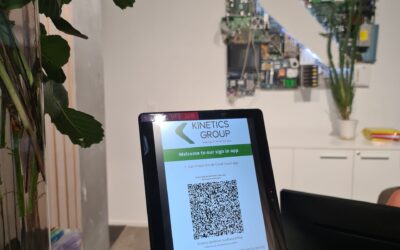
Kinetics COVID Policy
Our Covid-19 approach. A number of clients and partners are asking us about our Covid-19 policy, so we thought we'd share it! Like many workplaces, we've extensively consulted our team and worked through their range of views. Our workplace requires all visitors...

5 quick tips to help you save time every day in 2022
Who knows what 2022 will bring. We’re as happy as the next person to make predictions but we’d just predict we’d be wrong! About the only certain guess is that we’ll be under more pressure and with that, it makes sense to share a few everyday IT tips. 5...

Do you need to worry about the “Log4J” Cyber Security Zero-Day breach?
Mainstream media is abuzz with the latest software vulnerability. It is in a commonly used component called Log4J 2. This component is in widespread use and the risk is real. This is a fast paced and quickly changing alert. At the time of writing, the immediate...

What’s worse than having to pay Ransomware?
The answer : Having to pay it twice - (or even more). Your Cyber-Security is under more pressure than ever. According to Infosecurity magazine, "double" extortion ransomware victims are up a massive 935% - thats a ten-fold increase year-on-year. This is driven by the...

“Phishmas” – its not that punny
Whatever it takes to draw your attention to Cyber Security is worth it. Just because we take time off at Christmas doesn't mean the hackers do. They have taken a lot of heart from the way we have all embraced home-delivery for our shopping and are doubling down with...
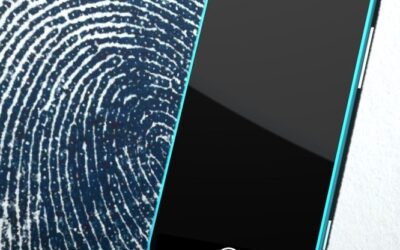
Is your Fingerprint effective security?
Straight out of the movies We are all used to the idea of using our fingerprints to log into our cell phones and, for some of us, our laptops. We’ve been told fingerprints are secure, and effective for ‘biometric authentication’ In the movies, we see finger prints...

Have you been vished?
What is vishing? Vishing is scamming via phone calls, effectively "phishing" by voice, hence the name, Voice phishing - Wikipedia Unfortunately, like many other cyber-attacks, incidents are on the rise. Because the damage is done over a phone call, they are even...