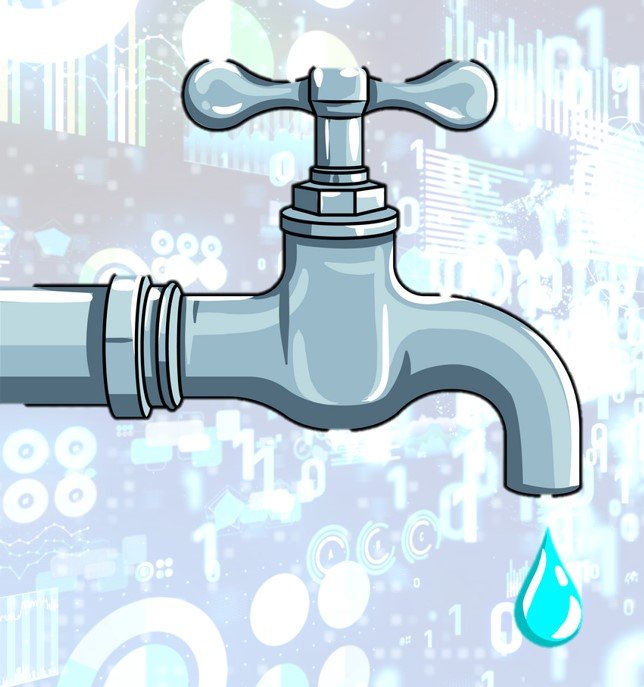
Data Leak Protection (DLP)
is the name of several policies in Office 365, setting up what data can, and can’t be, shared and with whom.
Imagine being able to automatically identify private information like passport numbers, Health IDs or bank account details and make sure that those are only being shared with people that are authorised to see them.
The good news is that you can do this with 365, provided you turn on the policies and set them up correctly, and monitor when data is shared.
Under the NZ Privacy Act, we’re all expected to take care of personal data entrusted to us and to make sure it’s only used for the purpose for which is being obtained.
With Office 365, there’s no excuse for that to be breached provided that we understand what data should be kept, what might be kept incorrectly, and how its being shared. With this we can set up rules to monitor your Office 365 system and report on how records are shared.
We include a basic set up of DLP in our KARE for Security S2 plan to get you started.
When QR codes go bad
Thanks to Covid, we’re all familiar with QR codes. Of course, with Covid, we were using the official tracer app to scan them, but in normal use, you can just use your phone’s camera to open the link. It’s a great way to make it easy to visit a website without having...
Is nothing safe? Fake logins!
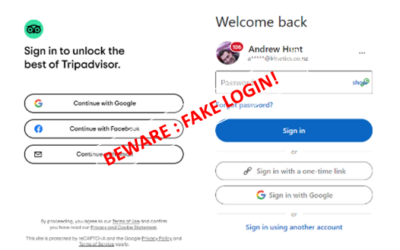
Every day, there is a new cyber-threat to watch out for, and to warn friends and colleagues about. I’m frequently stunned when talking to friends and colleagues that these threats are abstract and academic. For the sake of absolute clarity, these cyber risks...
What is Kinetics ITMAAS? Customer Stories.
IT is critical to the operation of almost every organisation. If your IT is more than computers and mobiles then WATCH THIS WEBINAR. If IT is a critical asset to your organisation, then WATCH THIS WEBINAR. If what IT does matters more than what IT is, then WATCH THIS...
What? An update to Windows 11 already?
We’ve previously posted about Windows 11. You won’t believe it, but there is an updated version to it, already! There are over a billion Windows 10 users, and many of those can’t upgrade to 11 simply because their current machines don’t have the horsepower, but that’s...
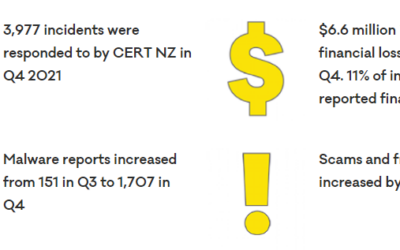
Hot off the press – we have just received CERT NZ’s report for the last quarter of 2021
So, just a quick reminder of who CERT NZ are – it’s the official NZ Government Cyber-Security agency. So, first up – 13% increase in reported incidents on the previous year and a big spike into the last quarter. 9% more phishing attacks. 24% more malware, based on the...
Are your staff or volunteers your organisation’s biggest security risk?
Despite the best technology defenses (next-gen firewalls and antivirus, advanced threat protection, mail washing, web filtering, regular patching) infections and security events can still occur due to what is often the biggest risk – your people People-risk is harder...
Is your IT strategy meeting the business needs of your community?
There’s a saying that goes “A goal without a plan is a wish." With that in mind, does your organisation have an IT Strategy? Is it aligned with your board's business plan? The reason this is important is that it allows you to make better decisions and be more...
Is the board doing enough to get the cyber-security cost/risk balance right?
Is your organisation doing enough to get the cyber-security cost/risk balance right? Cyber-security protection can feel like an unending cost. Is your board aware of their obligations to your not-for-profit? Are they aware of the unique risks that most NFP's...
Does your NFP have the right relationship with your IT provider?
Do you have the right relationship with your IT provider? Regardless of whether your IT provider is your in-house IT team or a trusted business provider, do you have the right relationship with them? The right IT provider will ask "WHY" long before they ask "WHAT" and...
Does your Not-For-Profit have the right data privacy policy?
Data privacy is now a hot topic in NZ. This was driven by three main factors: 1. The GDPR (General Data Protection Regulation) which came into effect in Europe in May 2018. This introduced strict regulations on what private information is, how to get consent from...